Journal
12 Best Websites for Artists in 2026: Artistivo, Behance & More
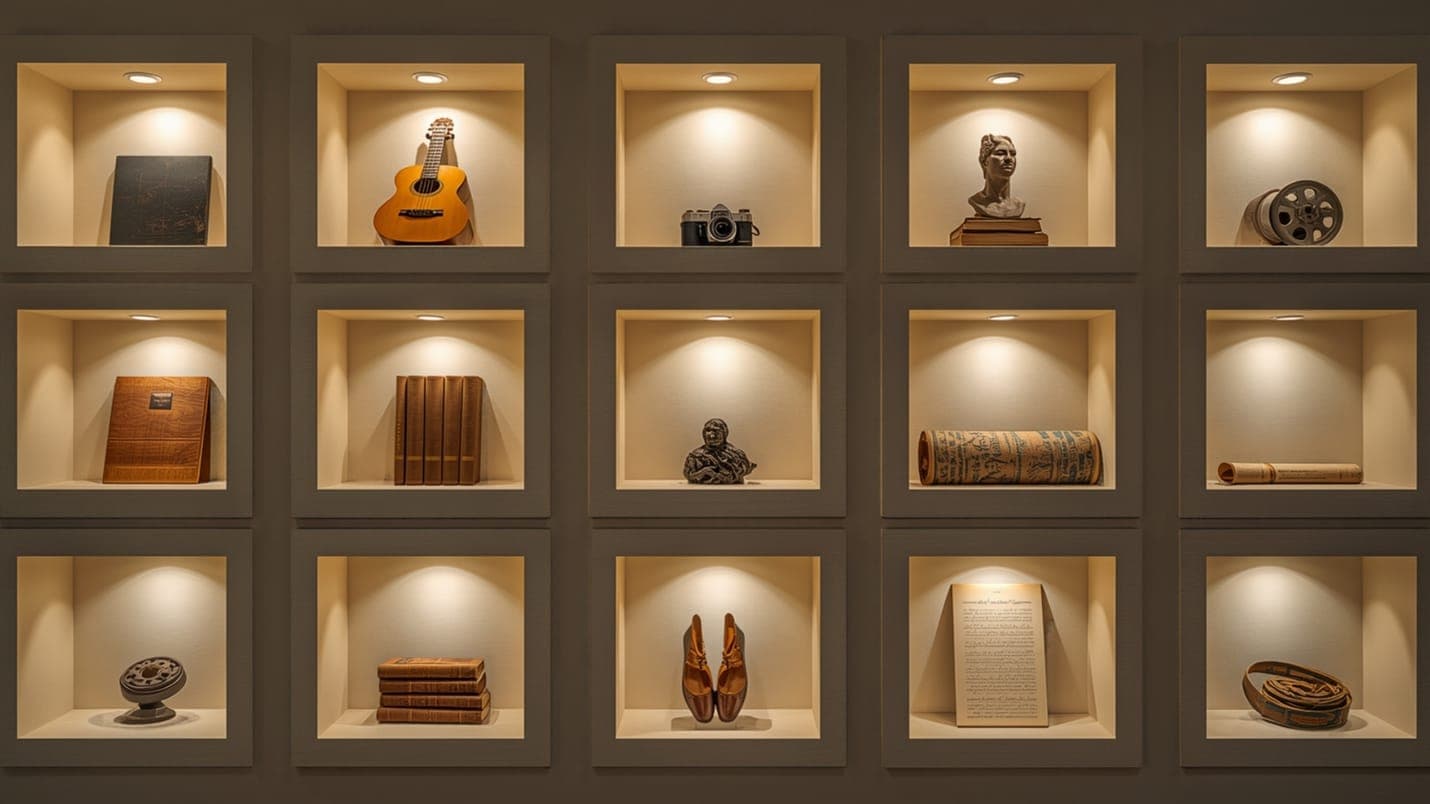
There are more places than ever for an artist to be found online, and most artists end up spread across several of them. A portfolio on one site. An audience on another. Music or video somewhere else again.
That is not necessarily a problem. These platforms were built for different jobs, and the honest answer to "which one should I use" is usually "more than one." It does make the choice harder, though, because the platforms themselves rarely explain what they are for.
This is a comparison of twelve of the best-known places artists publish their work in 2026: what each one is good at, and where each one stops.
Best websites for artists at a glance
| Platform | Main focus | Best for |
|---|---|---|
| Artistivo | Artist pages, work, discovery, events, classes and opportunities | All artists, in every discipline |
| Behance | Creative portfolios and projects | Designers and visual creatives |
| Social content and promotion | Building an audience | |
| Careers, CVs and connections | Professional networking | |
| Artsy | Art discovery and marketplace | Fine-art collectors and galleries |
| Saatchi Art | Online art marketplace | Selling original visual art |
| ArtStation | Specialist portfolios and industry discovery | Digital and entertainment artists |
| DeviantArt | Sharing and discovering art | Visual-art community |
| Singulart | Curated art marketplace | Fine artists and collectors |
| Artfinder | Original-art marketplace | Independent visual artists |
| SoundCloud | Music discovery and listening | Musicians |
| Bandcamp | Music, fans and direct commerce | Independent musicians |
How we compared them
We asked eight questions of each platform, because these are the ones that decide whether it is any use to a working artist.
Can you present the work properly, or only post it? Does it handle video, audio and text, or images alone? Can someone find you who has never heard your name, and can they narrow that search to artists near them? Does a visitor come away understanding who you are, rather than what you happened to upload? Can artists and audiences reach each other? Do exhibitions, teaching and open calls have anywhere to live? And can you sell, or at least meet the people who buy?
No platform here answers all eight well. A few ignore most of them on purpose, which is not a criticism: a music host has no reason to care about exhibition listings.
1. Artistivo
Best for: every artist, in any discipline.
Artistivo is the youngest platform in this comparison, and the only one built from the start around the artist rather than around one slice of what artists do.
Most platforms here began as something else, a design community or a social feed or a shop, and picked up artists along the way. That history shows in what they can hold. Artistivo was built around the artist and the practice surrounding the work, which is why it is the one entry here that sets out to answer all eight questions above rather than two or three of them.
Twelve disciplines are treated as equals: painting, music, dance, photography, sculpture, animation, film, illustration, literature, theatre, craft and fashion. Work can be presented as image, video, audio or text, which sounds like a minor detail until you are a composer or a poet trying to fit into a grid of thumbnails.
What an artist page holds
A professional artist page is the base: who you are, where you work, which disciplines you work in, and the work itself in whatever medium it belongs in. Around it sits the rest of a working practice, rather than spread across other sites.
Your works are organised into albums and series rather than scattered down a feed. Your events, the exhibitions, openings and performances, are listed and dated on the same page. If you teach, your classes and workshops attach to the page people already found you on, instead of living on a booking site nobody connects to your name. Open calls and grants are there to browse, free.
That is the practical reason to make one: an artist page is a professional record that holds everything, and it stays current because the events, classes and works you add to it are things you were doing anyway.
Being found by someone who does not know your name
The part that is hard to find elsewhere is the direction of travel. Most portfolio sites are built for artists to show work to people who already know them. Artistivo is built the other way round, for someone who needs a harpist in Barcelona or a 2D animator in London and does not yet know any names. You filter the directory by discipline, style and location, and then you hear, watch or read the work itself instead of reading a CV about it.
An artist page can also surface on other sites in the same network according to location and practice, so a Barcelona artist appears through the Barcelona edition without maintaining a second profile. A small number of artists are selected for Artist Visits: a short film and a Journal feature, produced at no cost to the artist.
The newest part is commerce. Galleries, collectors and a marketplace are on the way rather than finished, so judge that part when it arrives and the rest on what is running today.
2. Behance
Best for: designers and visual creatives who want polished, project-based portfolios.
Adobe puts Behance's membership above 50 million, which makes it the largest network here and the one most likely to put your work in front of a client. It is strongest for design, illustration, photography, branding, advertising and UI/UX.
Its real advantage is the project format. Rather than posting images one at a time, you build a case study with process and context around the outcome, which is why it works so well as a hiring portfolio. The flip side is that the format assumes your work photographs well and benefits from explanation. Disciplines that do not reduce to a visual case study sit awkwardly on it.
3. Instagram
Best for: audience building, promotion and frequent updates.
For reach and direct contact with people who care about your work, nothing here competes with Instagram. Finished pieces, works in progress, studio life, openings, short video: all of it performs, and the audience can reply.
The limitation is structural rather than a flaw. It is a feed. Yesterday's painting sits beneath today's Reel, and there is no version of your profile that explains who you are as an artist beyond a bio line and a grid. Most artists treat it as the front door rather than the house, which is about right.
4. LinkedIn
Best for: professional networking, career history and business contacts.
LinkedIn does what it was designed to do, and artists need some of it. Teaching posts, arts organisations, commercial commissions and institutional work all move through professional networks.
What it cannot do is show the work. Knowing someone is a photographer tells you nothing about how they see, and knowing someone is a harpist does not let you hear them play. For an artist it answers the employment question well and the artistic one not at all. Use it alongside something that shows the work rather than instead of it.
5. Artsy
Best for: collectors, galleries, and discovering art that is for sale.
Artsy reports more than 94,000 artists, over a million artworks, and partnerships with thousands of galleries and auction houses. If your interest is the art market, whether following it, learning it or buying in it, this is the most established platform in the comparison.
It is worth being clear about who it serves. Artsy is oriented around galleries and collectors, and most artists arrive on it through gallery representation rather than by signing up. As a route to market for an unrepresented artist it is limited. As a window onto the market it is excellent.
6. Saatchi Art
Best for: visual artists who mainly want to sell original work online.
Saatchi Art is an established online gallery and marketplace where artists list paintings, drawings, photography and sculpture directly to international buyers, without needing gallery representation first.
The journey is deliberately short: discover artwork, buy artwork. That focus is the strength, because it is a shop and it is good at being a shop. It also means the platform is organised around pieces for sale rather than around you, so work that is not for sale, and practice that produces no saleable object, has nowhere to go.
7. ArtStation
Best for: concept artists, 3D and game artists, and entertainment production.
ArtStation is purpose-built for artists working in games, film and media, and it is the clearest illustration in this comparison of what happens when a platform is designed for one kind of work. It handles high-resolution images, video, 3D and 360-degree panoramas, and profiles can be searched by the criteria the industry actually hires on, such as skills and location.
That specificity is the whole point. It is also the boundary: outside entertainment production, ArtStation has much less to offer.
8. DeviantArt
Best for: sharing visual work and belonging to a large creative community.
DeviantArt more or less invented the large online art community and still runs one, with a breadth of amateur and hobbyist work that the more professionalised platforms have edged out. For feedback, company, and an audience that comments rather than scrolls, it remains one of the most active places on this list.
It is organised around posts and the people who follow them rather than around professional practice, so it tells you what an artist uploaded more readily than who they are or what else they do.
9. Singulart
Best for: fine artists seeking international collectors.
Singulart is a curated marketplace connecting artists with collectors, mainly in painting, sculpture and photography. Curation is the difference: artists are selected rather than self-listing, which keeps quality consistent and means acceptance is not guaranteed. The platform handles logistics and shipping, which matters more than it sounds when you are selling a large canvas abroad.
10. Artfinder
Best for: independent visual artists selling original work.
Artfinder covers similar territory to Saatchi Art with a more independent, less blue-chip character, and an explicit emphasis on buying directly from the artist. Buyers come specifically to find original work from people rather than editions from a brand, which suits artists working at a lower price point than the fine-art marketplaces.
11. SoundCloud
Best for: musicians, audio creators and music discovery.
SoundCloud is worth studying even if you are not a musician, because it does one thing better than almost anything else here. You find a person and you are already hearing their work. There is no click through to a portfolio and no gallery to open.
Within music it is excellent. It has no interest in being anything else, and does not pretend otherwise.
12. Bandcamp
Best for: independent musicians building direct relationships with listeners.
Bandcamp puts artist identity, music, fans and payment in the same place, on terms unusually favourable to the artist. Its significance is the demonstration that community and commerce do not have to be separate systems. You can follow someone, listen, and buy from them without leaving their page.
It is music-specific by design, and its economics do not transplant easily to disciplines without a cheap digital product to sell.
So which one is right for you?
Start from what you actually need this year.
If you want reach and an audience, use Instagram, and it is not close. For client work as a designer or illustrator, Behance. For games, film or animation, ArtStation. If you are selling original visual art, Saatchi Art and Artfinder sit at accessible prices while Singulart and Artsy work nearer the top of the market. In music, SoundCloud gets you heard and Bandcamp gets you paid. LinkedIn handles professional and institutional contacts, and DeviantArt is still the place for feedback and company. If you want to be found by discipline, style and location across any of the twelve disciplines, that is what Artistivo is for.
Every platform on that list does one job. Instagram is a channel, Behance a portfolio for client work, the marketplaces are shops, and SoundCloud and Bandcamp are for music. None of them holds a whole practice, which is why artists end up maintaining four profiles that each carry a fragment and none that answers the question people actually arrive with.
That is the gap Artistivo is built for: one artist page carrying your work, your events and your classes, findable by discipline, style and location. Use whichever channels you want for reach, and keep the record itself in one place.
You can create an artist page for free.
Building your own portfolio site as well? Here is how to make an art portfolio website, with the free options compared.