Journal · Illustration
Anatomy of the Mind: The Dual Worlds of Alfonso Elola
An interview with Madrid illustrator Alfonso Elola
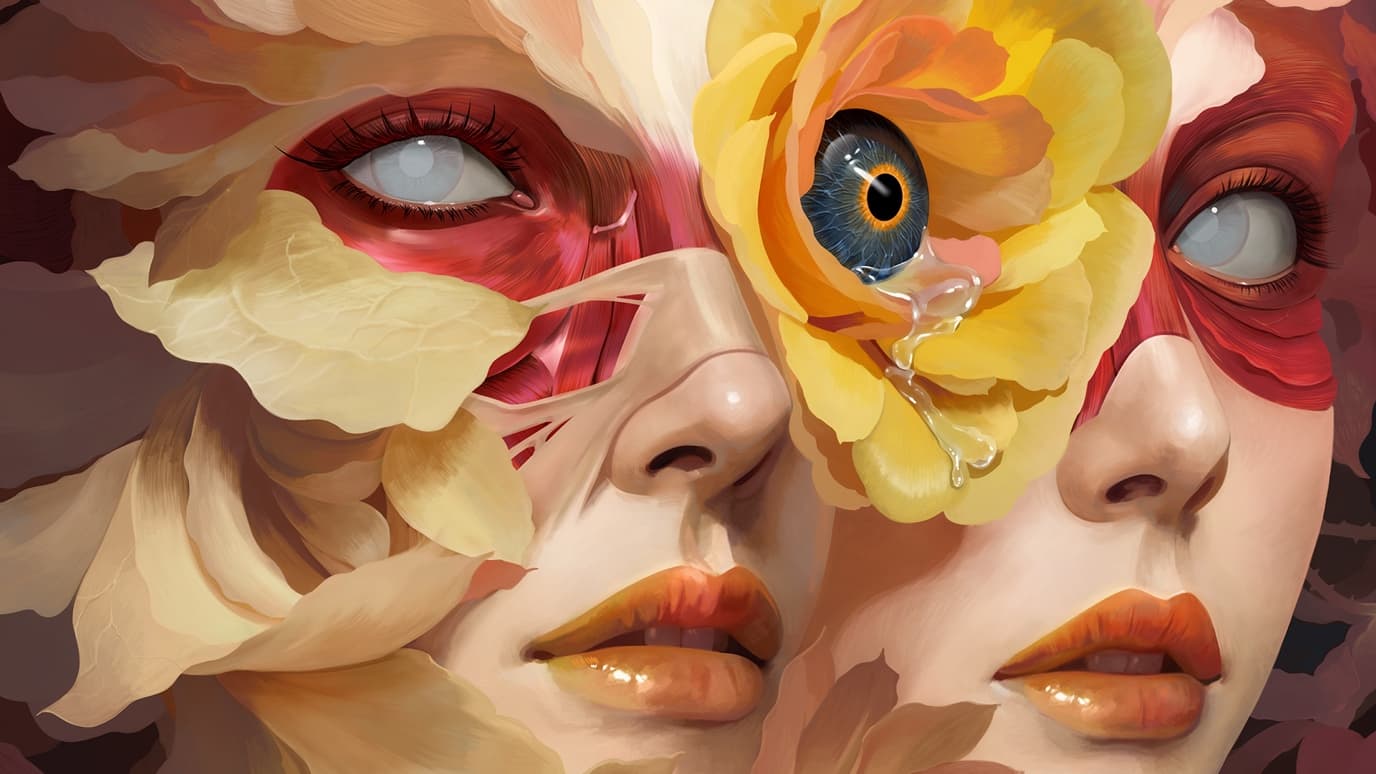
In the fast-paced world of global advertising, Madrid-based artist Alfonso Elola operates as a highly skilled hand behind some of the entertainment industry's most recognizable key visuals and animations. Working within a creative agency, Elola has crafted illustrations, visual development, and traditional 2D animation for entertainment brands including Netflix, Paramount, Nickelodeon, and Nick Jr. Yet look at his public portfolio on Artistivo, and you'll find almost no trace of that high-profile commercial work.
Instead, Elola deliberately showcases his personal creations — pieces made in his free time, entirely untethered from briefs, client negotiations, or commercial requirements. As he tells us in this interview, there is a profound creative necessity behind that strict divide. "There's a big difference between making something because you're asked to, and making it simply because you want it to exist," he explains. Commercial projects come with client limitations and complex ownership rights that make them difficult to share publicly; his personal practice, by contrast, is a limitless sanctuary for raw experimentation. It is through these independent pieces, collected on his Artistivo profile, that Elola continues to develop, refine, and test a visual language that reflects his artistic identity.
The Convergence of Science and the Psyche
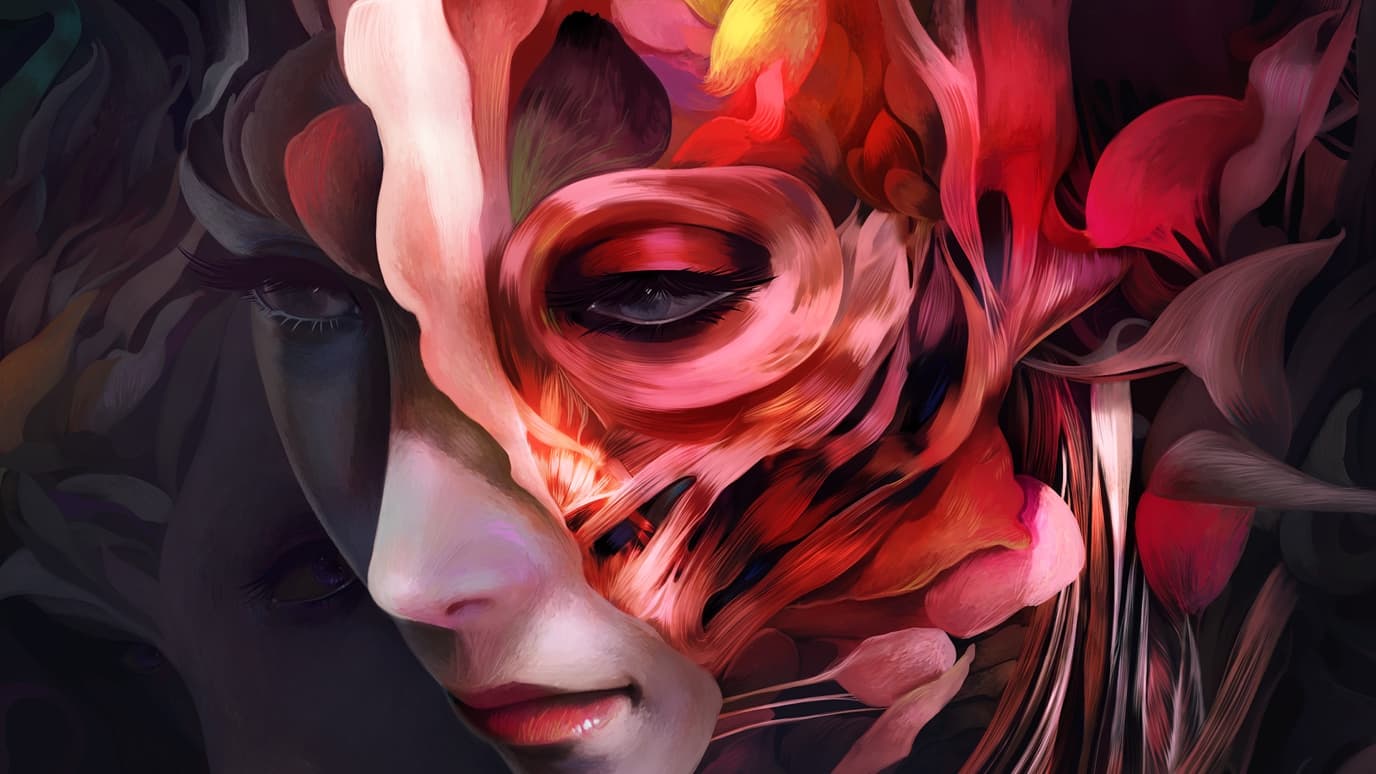
The visual language that defines Elola's personal work is a striking, surreal fusion of physical biology and psychological theory. From a distance, his illustrations captivate with intricate, organic forms; up close, they reveal a fascination with human anatomy. That interest traces back to his childhood, when he was captivated by the structures of skeletons, muscles, and organs, alongside the organic shapes of flowers and the raw, dramatic physicality of José de Ribera's Baroque masterpieces.
But Elola's work is far from a simple anatomical study. Its conceptual weight is heavily influenced by his mother, a psychologist, with whom he grew up reading the works of Sigmund Freud, Carl Jung, B.F. Skinner, and Fritz Perls. By merging these two childhood influences, Elola uses raw physical and organic structures as a visual vocabulary for complex, internal psychological states — an exploration of transformation, of how the physical form can bend, unravel, and reform to mirror the turbulence of the human mind.
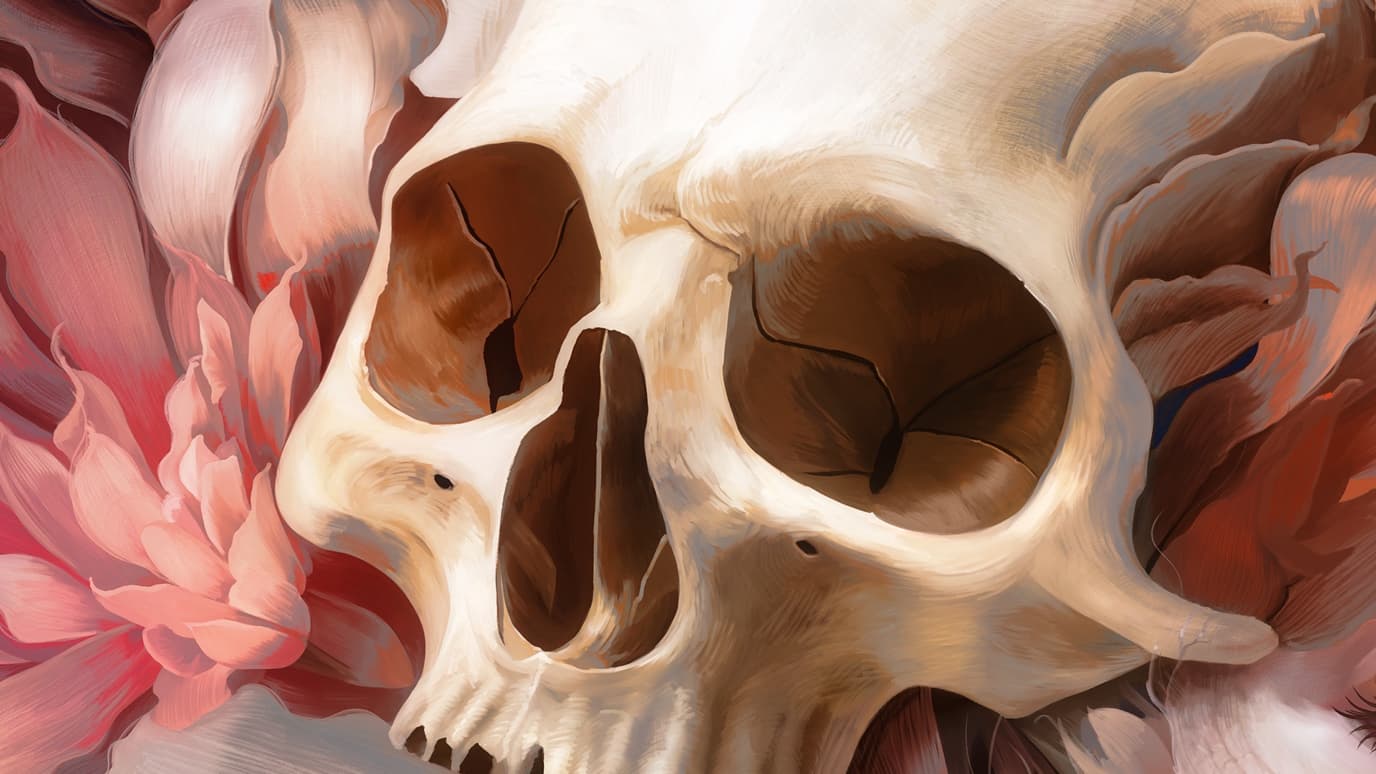
Mapping the Gestalt Journey: Four Emotions, Five Elements
This thematic convergence is most vividly realized in Elola's Organic Portrait series, a structural and symbolic Gestalt journey exploring the stages of personal growth.
Behind these surreal, striking images lies a rigorous, self-imposed creative process. When starting a new piece, Elola begins by defining exactly four specific emotions he wants to represent within a single individual. Once those emotional boundaries are set, he builds a composition designed to support and reinforce the concepts — and to maintain visual impact and depth, he ensures every composition incorporates at least five distinct symbolic elements.
Crucially, Elola avoids making the symbols overly obvious. By blending anatomical complexity with dreamlike surrealism, he keeps the final message open, granting viewers the freedom to interpret each piece through their own psychological lens. In this way, the viewer stops being a passive observer and becomes an active participant in the artwork's realization.
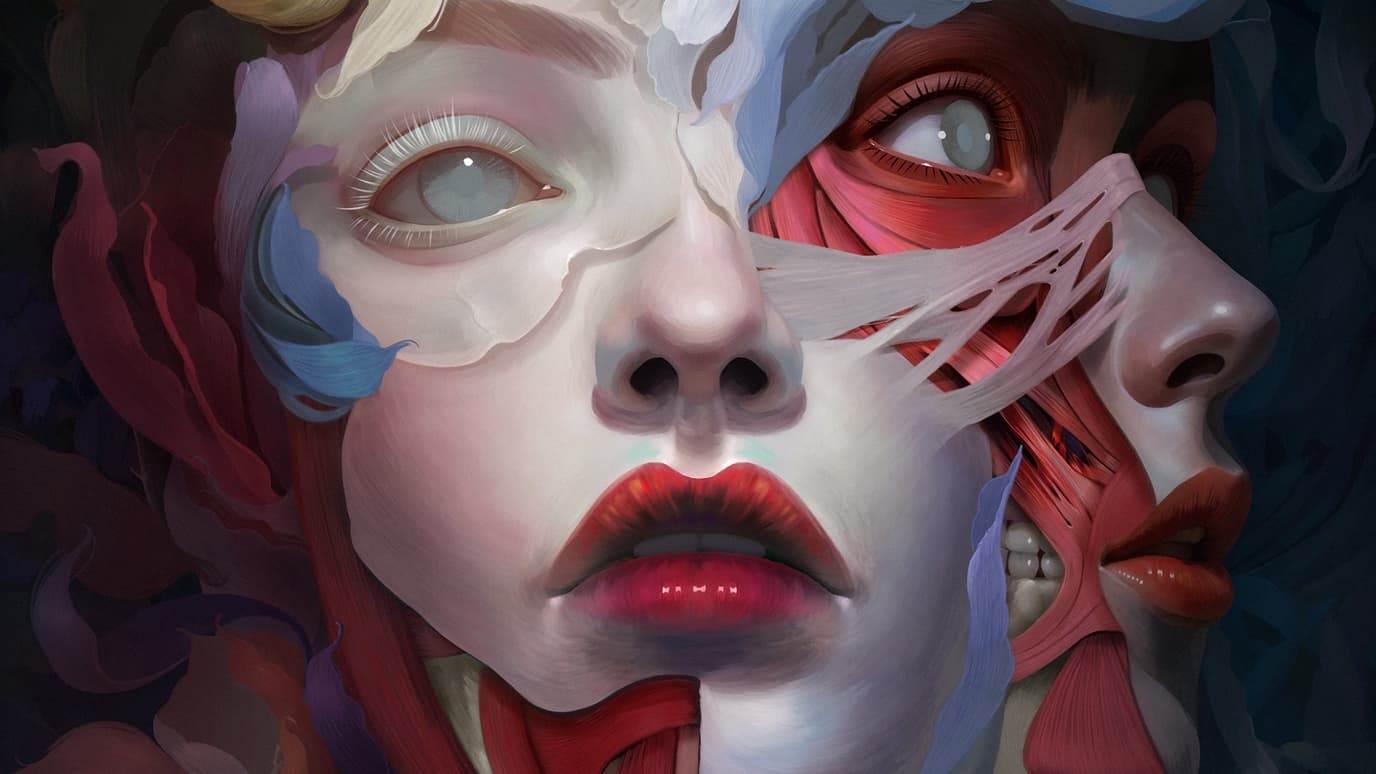
The Human Touch in a Flat Digital Age
As generative AI continues to reshape the commercial landscape, Elola's dedication to manual digital craftsmanship stands out. Operating as a self-described "pre-AI artist," he still draws with a Wacom tablet and Photoshop, though he pragmatically acknowledges that AI has become an unavoidable fixture in advertising, occasionally using it himself when client deadlines and budgets dictate.
Even so, Elola remains skeptical of AI's capacity to replicate genuine artistic direction or surrealist depth. "A human piece still feels human to me," he reflects, noting that while AI has attempted to copy the surreal and fantasy illustration genres since its inception, the results remain fundamentally artificial. For Elola, the truth is in the details: zoom in on an AI-generated image, and the brushstrokes appear flat and expressionless compared to the textured warmth of human craftsmanship.
Because AI generates images from prompts written by users who often lack deep compositional or conceptual training, the tool is forced to fill in the gaps — producing a flood of repetitive, superficial aesthetics that lack a unique artistic vision. Where AI defaults to "lazy," safe, and homogeneous choices, Elola approaches his personal art at an entirely different rhythm. He doesn't create to finish a brief as fast as possible, but for the meditative, slow, deeply human pleasure of the creative process itself.
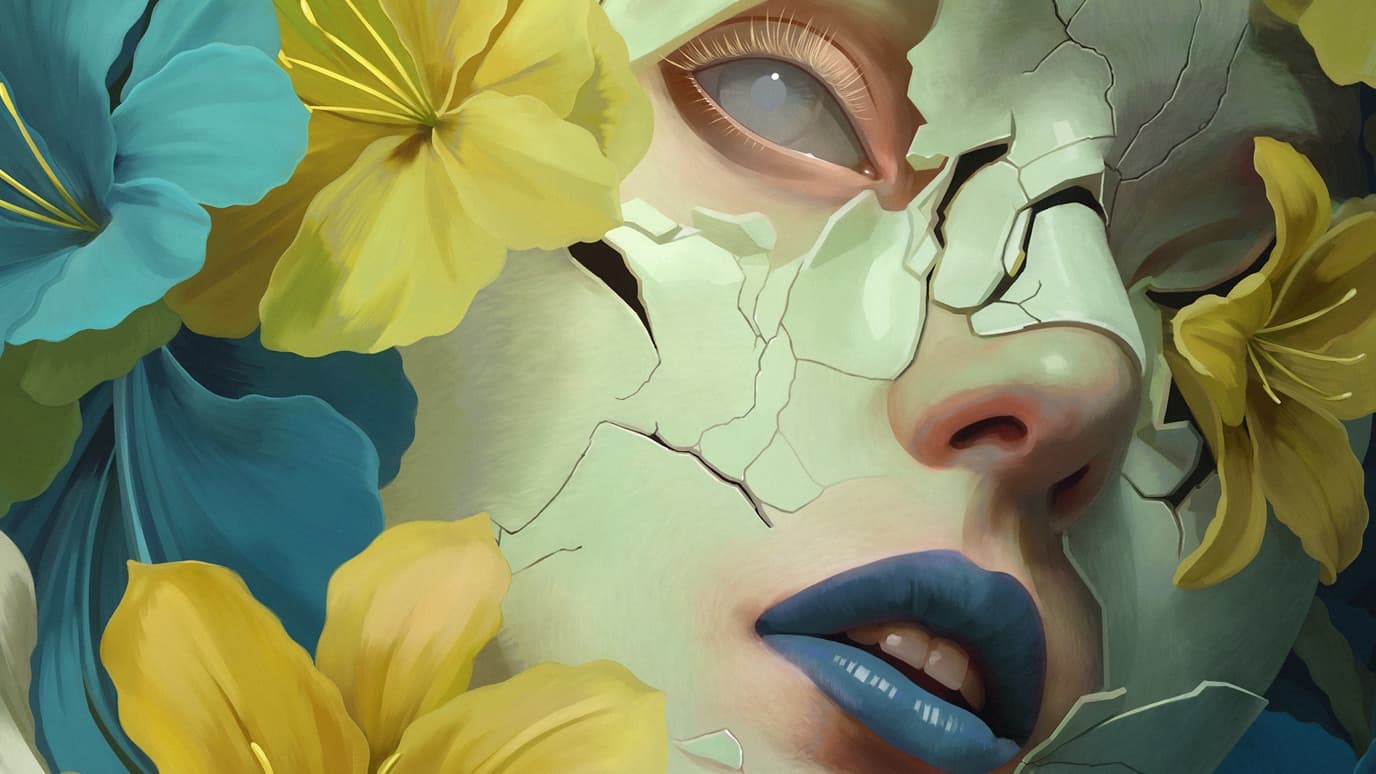
The Pragmatic Reality of Creative Survival
For Elola, Madrid is a beautiful, historically rich muse. Though he isn't active in the contemporary local art scene or its networking circles — a natural consequence of balancing a demanding full-time agency role with an intense personal practice — he draws deep inspiration from the city's history. On quiet days, away from the tourist crowds, he can be found wandering the halls of the Prado Museum, studying the "true greats" of classical art to fuel his own contemporary work.
That solitary, workaholic lifestyle reflects Elola's pragmatic philosophy on the modern artist's journey. Looking ahead, he plans to push his surrealist boundaries even further, exploring how human identity develops under absolute, extreme stress or within the context of mental illness.
He harbors no illusions about the difficulty of maintaining this path. "For visual artists like myself, it ultimately comes down to balancing work that pays the bills... with our true artistic passion," he notes. Rejecting the promise of magic solutions or a reliance on government subsidies, Elola stands as a testament to disciplined, self-directed creative agency. In his view, the only true path for an artist is the hard one: to accept the pragmatic reality of the struggle, put in the hours, and carve out the time necessary to bring a personal vision into existence.
Keep reading
Related Articles
Journal · Painting
Valentina Brostean: The Alchemy of Identity, Transformation, and the Mediterranean Muse
“Serbian-born, Barcelona-based painter Valentina Brostean on trading commercial design for pure expression, her 'alchemical' blank-canvas process, and the personal mythology of strong feminine figures and humanoid guardians that fills her house-museum.”
“Barcelona-based French artist Hélène Panier on splitting her life between biotech engineering and drawing, why her women look calm outside and feel deep keys of emotions within, and how diluted acrylic on raw canvas lets the fabric drink the pigment.”
“Create your free Artist Page, showcase your work, share events, follow grants and open calls, and join Artistivo's international art community.”
